Product description
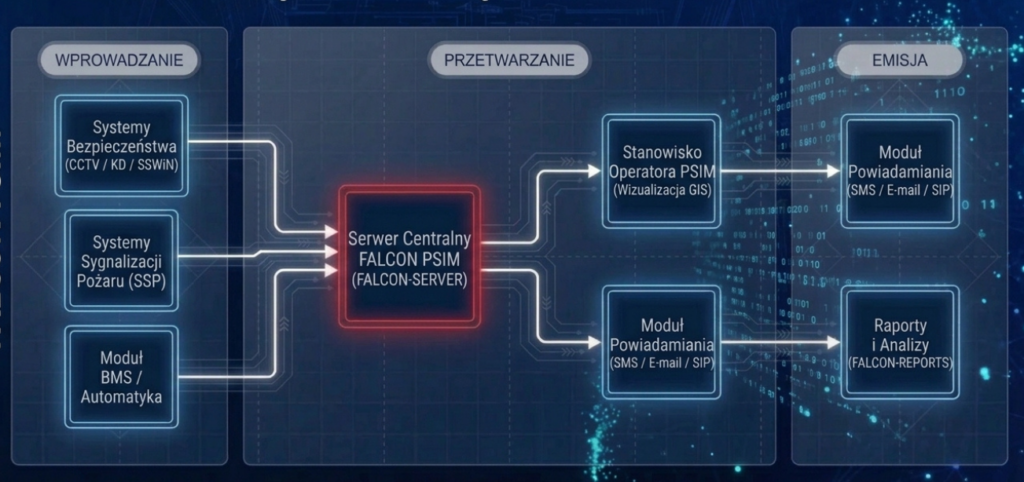
PSIM-class software (Physical Security Information Management) is a superordinate platform that integrates all of a facility’s physical security systems into a single, coherent management layer. Unlike classic building management systems, PSIM focuses exclusively on security and crisis situations, combining intruder and hold-up alarm systems (SSWiN), access control (KD), video surveillance (CCTV/VMS), fire alarm systems (SSP), perimeter protection (fence-crossing detection, video analytics, microwave barriers), intercoms, fire-protection systems and other installations that often come from many different manufacturers and operate in separate, mutually incompatible standards.
A key task of PSIM is the normalisation and correlation of events arriving from all these subsystems. Instead of monitoring each system separately at a separate operator station, PSIM collects all alarms and events in one place, enriches them with context (e.g. location on the facility map, associated camera recording, event history in a given zone) and presents them to the operator in a uniform, unified graphical interface — usually in the form of interactive maps and building plans with the devices and their current status marked on them.
An important element of PSIM systems are the response-procedure management modules (workflow / SOP — Standard Operating Procedures). After an event is detected (e.g. an intrusion into a protected zone, smoke detection, an unauthorised access attempt), the system automatically guides the operator step by step through the defined response procedure: it prompts who to notify, what verification steps to perform, which systems to arm or disarm, and all actions are recorded in an audit log together with the operator’s reaction time — which is important both for assessing the effectiveness of protection and for compliance requirements.
PSIM also enables advanced event correlation between systems, e.g. the automatic calling up of a view from the nearest camera after an alarm from a motion sensor, the locking of doors after a fire hazard is detected in a given zone, or the generation of a priority alarm when several independent events indicating a real threat occur simultaneously (reducing the number of false alarms). The historical data collected by the system allows the creation of incident reports, the analysis of security trends and support for post-incident investigations.